7 Tips for Smarter Supermarket Shopping
A trip to the supermarket isn't just about grabbing items off shelves. Every store is carefully designed — aisle layouts, shelf placement, and promotions — to make you spend more than you planned. These seven tips are what genuinely frugal shoppers do consistently, saving hundreds of dollars a year without changing what they buy.
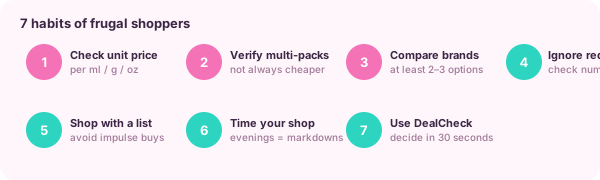
1Always check the unit price
Most shelf tags show a small unit price (per 100ml, per kg, per oz) beneath the main price. Train your eye to find it. If two items have different sizes or units, the unit price is the only fair comparison.
Example: Olive oil 500ml at $6.00 vs 750ml at $8.50. The larger bottle looks expensive — but per ml: $0.012 vs $0.011 → 8% cheaper per ml.
When the tag doesn't show unit price, or you want to factor in a promo: open DealCheck, enter both, and see the answer in 30 seconds.
2Multi-packs aren't always cheaper
Most shoppers assume "bigger pack = better value." But in 30–40% of cases, the price per unit in a multi-pack is actually higher than buying singles — especially for:
- Items currently on single-unit promo (sale on small, not the pack)
- Premium packs bundled with extras you don't need
- Brands that deliberately price packs higher to exploit the assumption
Spend 30 seconds checking before you commit to a big pack.
3Compare across brands before you decide
If you're not brand-loyal, compare at least two or three options. Example — 1L milk:
- Brand A: $2.80 · 10% off
- Brand B: $2.50 · no promo
- Brand C: $2.60 · Buy 1 Get 1
Most people grab Brand A (sale sign!), but Brand C at BOGO = $1.30 per litre is the clear winner — half the per-unit price of the others.
4Don't be fooled by red tags and big numbers
Stores use red labels, bold fonts, and large numbers to trigger a "deal" feeling — even when nothing is discounted. Common tactics:
- "$9.99" — feels like $9, not $10 (price anchoring)
- "Was $15.00, now $9.99" — the "was" price may never have been the real price
- "Special price" — sometimes the same price as always, just with a new tag
Always calculate unit price. Don't be moved by the label — only by the number.
5Shop with a list — never browse aimlessly
Unplanned browsing costs an average of 30–50% more per trip. Before you go:
- Build a list on your phone, every item you need
- Set a budget — e.g. "max $80 today"
- Follow a route through the store; skip sections you don't need
This removes impulse purchases and leaves room in your budget for the things you actually need.
6Time your shop strategically
When you shop affects what you can save:
- Weekday mornings — fresh produce at peak quality, no crowds
- Evenings (~6–8 pm) — fresh items near sell-by date marked down 30–50%
- End of month — stores run clearance promos to hit targets
- After payday (25th–31st) — retailers know wallets are full and run big deals
Avoid: weekend evenings — crowded, rushed decisions, less likely to compare carefully.
7Use a tool to decide in-store
Your smartphone is your best shopping companion. DealCheck was built for exactly this:
- Enter price + quantity for each item
- Select the promo type (BOGO, % off, pack mode)
- Tap Compare — see which item is cheaper per unit, and by how much
Free, no login, no personal data stored. Works offline after first load.
Start saving today
Try DealCheck — compare your first two items in under 30 seconds.
🛒 Open DealCheckSummary
Smarter shopping doesn't require changing what you buy — just pausing for 3 seconds before each item goes into the cart:
- What is the unit price?
- Is there a cheaper brand right now?
- Is this promo actually a deal?
Follow these 7 tips on your next 4 grocery trips — you'll likely save $30–$100 per month without any lifestyle changes.